Weston museum weighs expansion options ahead of 2037 bicentennial
By Megan Jantos·News·Tuesday, October 27, 2026
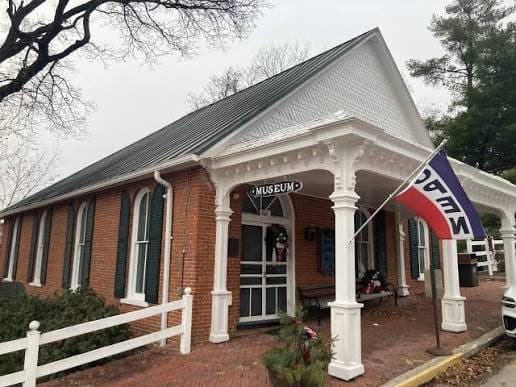
The Weston Historical Museum is weighing several ways to expand its space and improve how it preserves and presents the town’s history as it looks toward Weston’s 2037 bicentennial.
Museum leaders outlined the long-range vision during a recent presentation, saying the current building lacks adequate space for collections storage, research, public programs and visitor services. The museum has not chosen a plan or announced a fundraising goal. Organizers said they are preparing for a capital campaign but have not officially launched it.
Four possibilities are under consideration: expanding the current museum, building a new museum at another site, splitting exhibits and research between two locations, or sharing a community center with other local organizations.
A concept prepared by Kansas City’s Strata Architects shows an addition that would make the current museum more than twice its present size. Museum Director Clay Bauske said expanding at the current site could be the simplest option, but the location has no room for more parking and sits on a hill that can be difficult for some visitors to access.
A new site could offer more parking and make accessibility easier to plan, Bauske said. A shared community center could allow organizations such as the museum and Chamber of Commerce to share space and visitor services. No site has been selected.
The space limitations affect both visitors and the museum’s work. Curator Shelley Franklin said the building’s aging heating and cooling system makes temperature and humidity difficult to regulate. Some historic store ledgers have been kept in an upstairs area that gets hot, she said.
The museum also displays about 98% of its collection, Bauske said. The long-range plan calls for core exhibits that explain Weston’s national, regional and local history, along with rotating exhibits and better storage for objects not on display.
The museum has faced space constraints for decades. Franklin said records show that it was seeking contributions to expand by 1964. Plans and a capital campaign in the early 1970s also failed to produce an expansion.
“This is not a new thing,” Franklin said. “Everyone’s always just made the best of it.”
The museum’s presentation described the bicentennial as a target for its long-range vision, but did not set a construction schedule. Bauske said organizers expect to work on a capital campaign in the coming months.