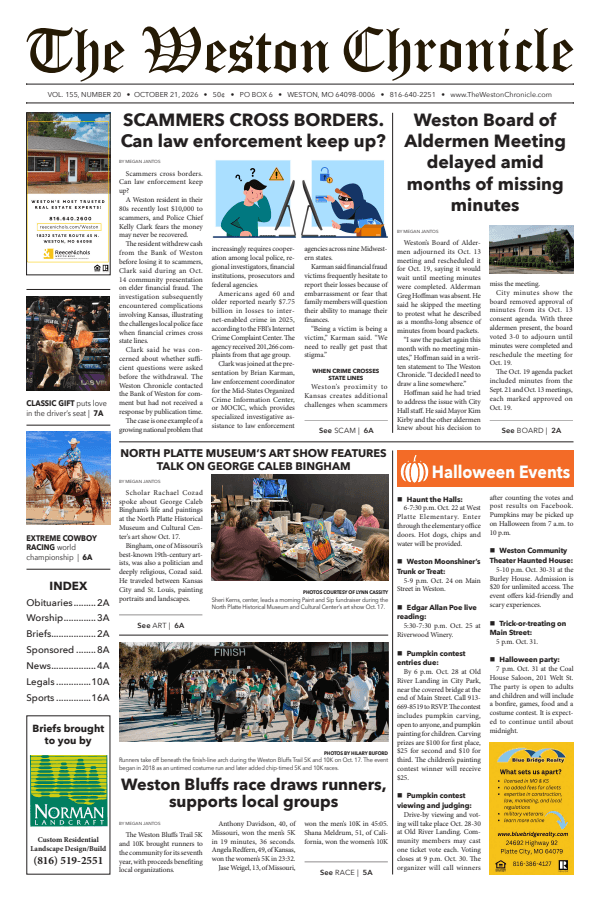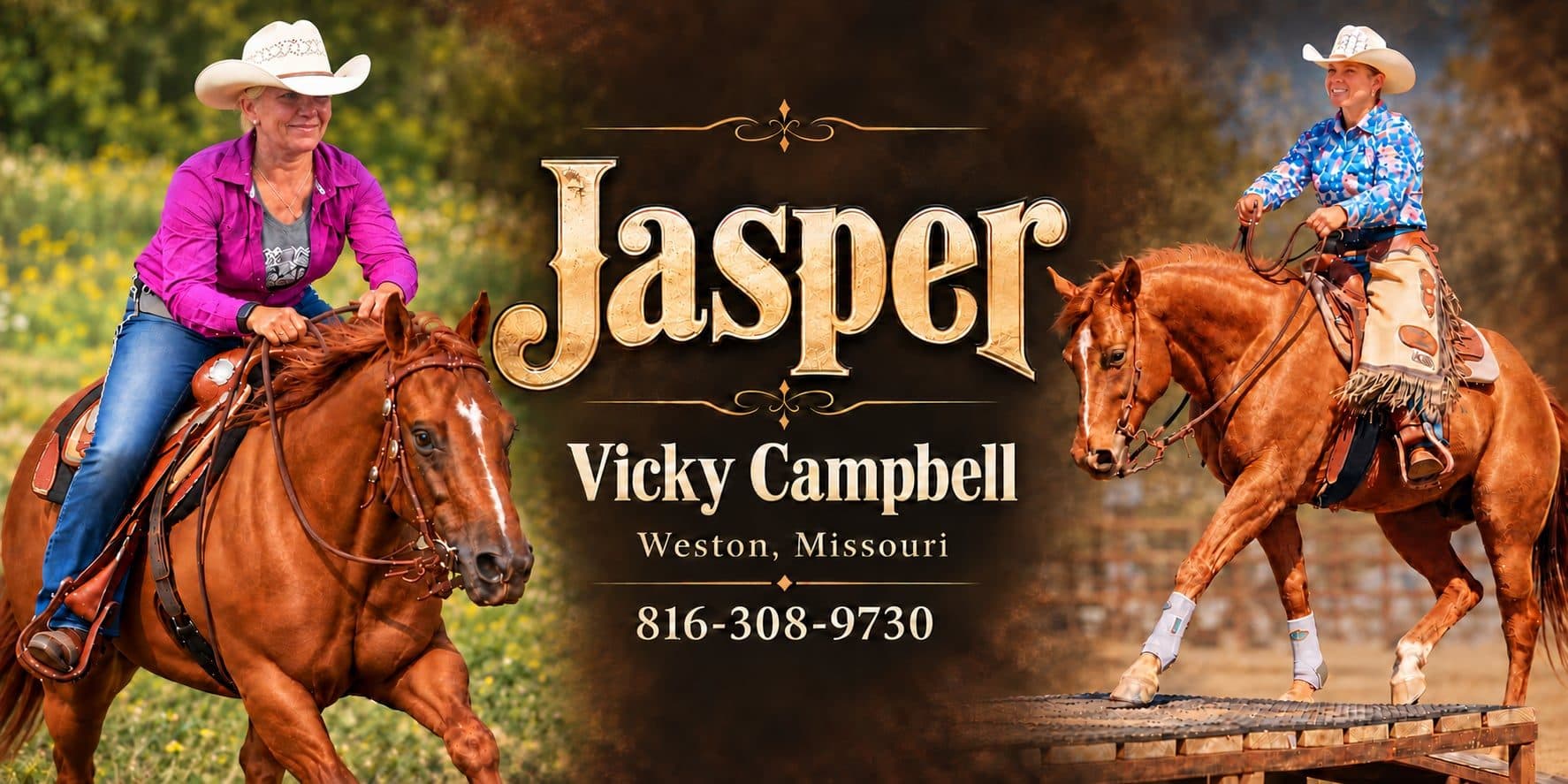
Vicky Campbell has earned a place at the Extreme Cowboy Association’s World Championship after a season of regular competition and top-five finishes.
Campbell will compete in the novice and intermediate divisions at the event, scheduled for Oct. 28 to Nov. 2 in Glen Rose, Texas. Qualification is based on points earned in competition. Campbell said she began competing consistently this year and often finishes in the top five in fields of about 20 to 25 riders.
Extreme cowboy racing challenges horse and rider to complete a timed obstacle course. Competitors have three minutes to navigate 14 obstacles, which can include bridges, gates and jumps. The course is revealed on the day of the competition, so riders must be prepared to respond to unfamiliar challenges.
“You can have the best-trained horse on the planet, but if you don’t know how to navigate the course and you don’t have a relationship with that horse, then the trust isn’t there,” Campbell said.
Campbell trains four days a week at Wild Rose Equine Center in Dearborn. Rather than repeatedly practicing a full course, she works on individual skills. Practicing the same course too often can lead a horse to anticipate what comes next, she said.
One day, Campbell might practice rollbacks — stopping and turning the horse — and another day she might work on jumps, bridges or opening and closing gates.
That preparation matters when a horse hesitates. This year, Campbell’s horse refused to cross a bridge. Moving on would have cost points, but staying to encourage the horse would have cost time.
Campbell set aside the competition mindset.
“This is a training ride,” she said. “I’m no longer in the competition, but by golly, we’re going to get over it.”
The sport has challenged Campbell’s confidence, too. She began exploring extreme cowboy racing about three years ago, around the time she fell from a horse in an accident. This season, she competed more consistently and used the novice division to rebuild her confidence at speed. She plans to leave the division, though she remains eligible.
“The biggest lesson, I think, is trust in your abilities so that the horse can trust you,” Campbell said.
Campbell’s connection with horses began when she was 5 and riding a pony in England. She remembers being bucked off face-first into the mud — and being hooked. After moving to Holland, she persuaded her mother to pay for a half-hour riding lesson every two weeks. She later rode dressage and jumping, but discovered her enthusiasm for quarter horses in Switzerland in 1995.
“When I sat on the quarter horse, I said to myself, ‘Where have you been all my life?’” Campbell said.
She brought a quarter horse with her when she moved to the United States in 2001. Extreme cowboy racing, she said, gives horses a chance to use their natural abilities. The sport is open to different breeds, and riders can compete on a mule.
Campbell recommends that people interested in trying the sport watch a few competitions, talk with riders and work with a trainer or attend clinics to learn how to handle the obstacles.
At one competition, Campbell faced a large mound and was frightened to ride up and down it. Fellow competitors encouraged her to breathe and take it at her own pace.
“It’s not cutthroat,” Campbell said. “Everybody is really, really there for you.”