According to Merriam-Webster, there are four primary definitions of the word "punch":
1. A forceful blow delivered with a closed fist.
2. A mechanical tool used to pierce holes or stamp designs into hard materials like metal, leather, or paper.
From the Recipe Box of Marilyn Lindahl
 Advertisement
According to Merriam-Webster, there are four primary definitions of the word "punch":
1. A forceful blow delivered with a closed fist.
2. A mechanical tool used to pierce holes or stamp designs into hard materials like metal, leather, or paper.
 Advertisement
3. An abstract quality describing impactful characteristic. Such as, a speech can pack a punch, punch line, roll with the punches, and punch drunk.
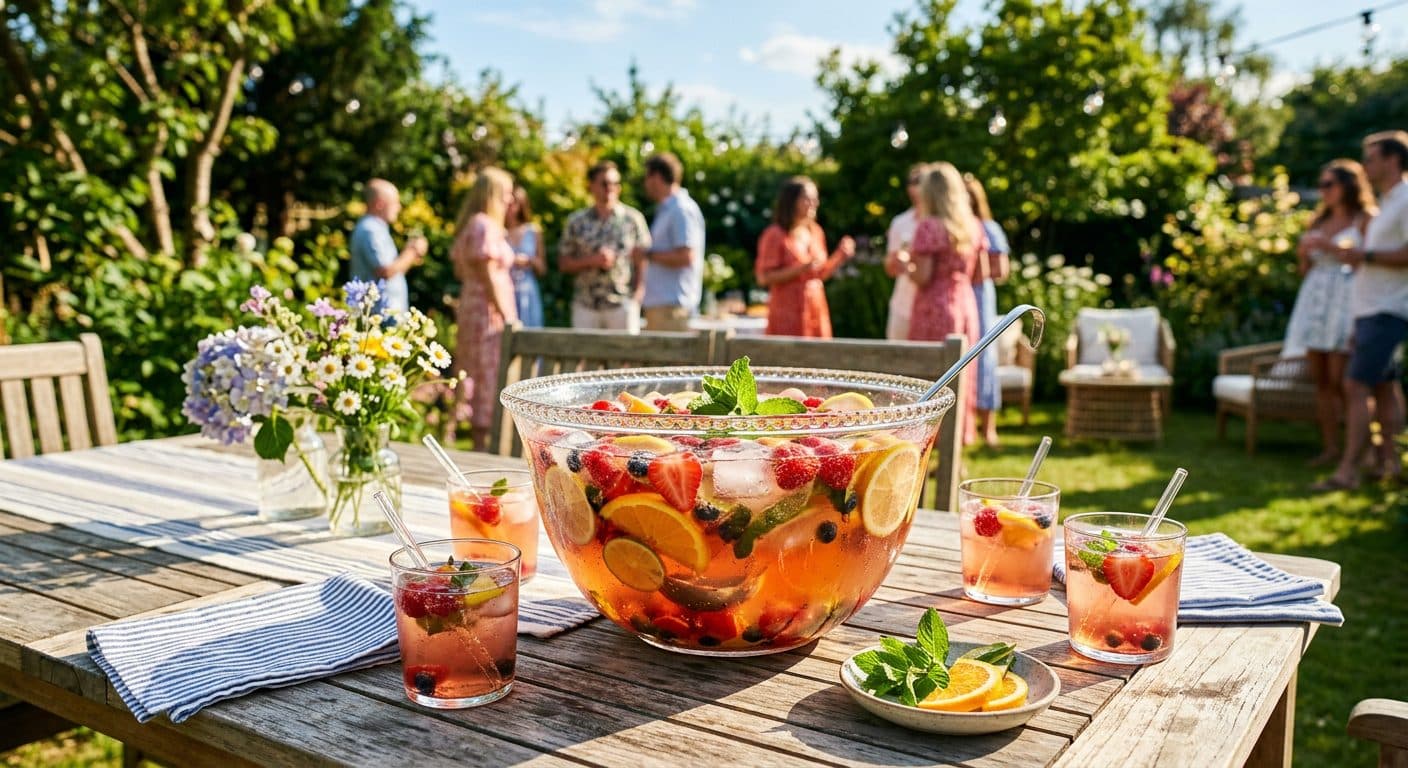
4. A drink called punch. Punch is a broad category of mixed drinks—both alcoholic and non-alcoholic served in a large communal bowl at parties and celebrations.
To discover how punch became a drink, we must go back to the 17th century for the answer. Pañca, pronozd PAHN-chuh (as in "punch-a"), is the ancient Sanskrit root for the number "five". Originally, pañca recipes required exactly five core ingredients: alcohol, sugar, lemon or lime juice, water, and spices or tea. It quickly became a staple on long sea voyages (minus the alcohol) because the citrus helped prevent scurvy.
Food historians note one other factor that likely helped solidify the name. Some suspect the name may also be a play on "puncheon"—a large, short, and stout shipping barrel that traders used to transport and serve spirits.
When sailors and the British East Indian Company brought the drink back to Europe in the 1600s it became an instant hit. Because the raw ingredients, sugar, citrus, and imported spices, were expensive and a status symbol of the affluent, drinking it quickly became associated with high-society gatherings and parties.
The classic proportions of Punch follow an ancient verse: one of sour, two of sweet, three of strong, four of weak. The sour is from lime or lemon juice; the sweet is the sugar; the strong is rum or other dark spirits; the weak is water, fruit juice or iced tea; (plus you can add “spicy” with nutmeg, cinnamon or other spices). This foundational 1-2-3-4 structural formula ensured that the potent, unrefined spirits of the era perfectly balanced into a smooth, drinkable beverage.
The first written recipe for punch dates back to 1638, when Johan Albert de Mandelslo, a German who ran a factory in the Indian city of Surat, wrote that his workers drank a kind of drink made of brandy, rosewater, lemon juice and sugar.
Over the centuries, the recipe expanded and morphed. American punch recipes span a wide spectrum, from historic vermouth-and-aperitif based bowls to large-batch, fruity party favorites. Whether you need an upscale cocktail, a family-friendly fruit blend, or a strong spiked punch, these classic and modern styles recipes are perfect for your gatherings. Today, many "fruit punches" frequently lack alcohol. Punch is universally considered America's oldest cocktail.
Philadelphia Fish House Punch
Dating back to the 1730s at the State in Schuylkill Angling Club in Philadelphia, this historic punch is a deceptively strong, tart, and fruity classic. The traditional recipe makes a large batch using Jamaican rum, cognac, peach brandy, freshly squeezed lemon juice, and an oleo-saccharum (sugar muddled with lemon peels). Fish House Punch is made for lazy summer afternoons or when heated and mulled, it is perfect for lazy winter weekends.
1 C sugar
4 lemons, peeled and peels reserved
4 C black tea (or water)
1 C lemon juice
4 C Jamaican rum
2 C cognac
½ C peach brandy
Garnish: lemon wheels and freshly grated nutmeg
In a large bowl, add sugar and lemon peels, and rub together to release the citrus oils into the sugar. (This is called oleo-saccharum.) Allow oleo-saccharum to infuse for at least 30 minutes.
Dissolve sugar with warm water or tea. Add rum, cognac, lemon juice and peach brandy and stir to mix.
Add a block of ice to chill, and continue to add smaller pieces of ice for desired dilution. Or freeze a portion of the punch.
Garnish with lemon wheels and freshly grated nutmeg.
Serve 18-20.
https://www.diffordsguide.com/cocktails
Regent's Punch
This is an opulent, historically rich cocktail dating back to the Regency Era of 19th-century England. Originally favored by the Prince Regent, later King George IV.
Strips of zest from 2 lemons
Strips of zest from 2 oranges
One-half 1-liter bottle VSOP cognac
10 oz fresh orange juice
4 oz fresh lemon juice
3/4 C superfine sugar
2 oz maraschino liqueur
32 oz chilled brewed green tea
4 oz pineapple syrup
4 oz Jamaican rum
4 oz Batavia-Arrack van Oosten*
Three 750-ml bottles chilled champagne
Marinated pineapple
Ice
In a large jar, combine citrus zests with the cognac; let stand at room temperature overnight. Strain the cognac and discard the zests. In a punch bowl, combine the citrus juices. Stir in sugar until dissolved. Add the infused Cognac, maraschino liqueur, tea and pineapple syrup. Stir in the rum and Batavia-Arrack van Oosten and refrigerate until chilled, about 2 hours. Add the champagne, marinated pineapple and ice.
* Batavia-Arrack is a highly aromatic, pungent spirit from the island of Java, Indonesia, often described as rum's funkier, more savory ancestor
Recipe from David Wondrich, award winning drinks writer and renowned cocktail historian.
Mid-Century: Retro Party Punch
By the 1960s, punches shifted toward sweet, large-batch party drinks featuring sherbet and soda. This style became a staple for festive holiday gatherings.
1 fifth (750ml) vodka
2 cans (6 oz each) frozen orange juice concentrate
1 quart club soda
1.5 quarts ginger ale
1 pint of raspberry or lime sherbet
Combine vodka and frozen juice concentrate in your punch bowl. Slowly stir in club soda and ginger ale. Top with scoops of sherbet and let it melt slowly into the punch.
Gaelic Punch
This hot Irish punch is a simple way to celebrate with Irish whiskey. Try it for St. Patrick's Day or any time you need a festive warm-up.
3/4 C Demerara or other raw sugar
Zest from 6 lemons
40 oz boiling water
1 (750-ml) bottle Irish whiskey
Pinch of freshly grated nutmeg, for garnish
6 thin lemon slices, each studded with 4 cloves, for garnish
In a heatproof bowl, muddle lemon zest with sugar. Let stand for 1 to 2 hours. Muddle mixture again, add 8 oz boiling water, and stir until the sugar dissolves. Strain into a warm heatproof bowl and stir in the whiskey. Add the remaining 32 oz of boiling water and garnish with studded lemon slices and nutmeg.
Recipe from David Wondrich, award-winning drinks writer and renowned cocktail historian.
Strawberry Champagne Punch Recipe
The recipe is perfect any time of year and it will quickly become a new favorite. No matter what type of party you are hosting, your guests will enjoy its fruity flavor and refreshing sparkle.
1 (12-oz) package frozen fruit punch concentrate
2 C water
1 1/2 C fresh or frozen sliced strawberries
2/3 C orange juice
2 T lemon juice
1 (750-milliliter) bottle champagne
2 (12-oz) bottles ginger ale
Strawberries, rosemary, seasonal fruits, or citrus slices, for garnish
In a punch bowl, combine partially thawed fruit punch, water, strawberries, orange and lemon juices to create the fruit juice base. Stir well and store in the refrigerator until ready to serve.
Just before serving the punch, add champagne and ginger ale. Garnish with fresh strawberries, rosemary, seasonal fruit, or citrus slices. Serve and enjoy.
Tip: Adding the wine and soda at the very last minute ensures that your punch is as effervescent as possible.
Recipe from The Spruce / Rachel Riesgraf
Nonalcoholic Cranberry-Pomegranate Punch
This punch does not need booze to please a party. The combination of tart fruit juices with nonalcoholic sparkling wine fruit juice and cardamom-cinnamon tea bags creates a sweet, spiced, sour drink everyone can enjoy. For a boozy version, substitute a dry white sparkling wine like Prosecco or Cava.
Cardamom-Cinnamon Syrup
2 C granulated sugar
2 C water
4 bags cardamom-cinnamon tea (such as The Republic of Tea)
Punch
4 C cranberry juice
4 C pomegranate juice
3 C fresh lemon juice (from about 16 lemons)
8 C nonalcoholic sparkling wine (such as French Bloom Le Blanc)
Ice ring, for serving
Cinnamon sticks, mint sprigs, citrus wheels, pomegranate arils, and whole cranberries, for garnish
Combine sugar, 2 C water, and tea bags in a medium saucepan; bring to a boil over medium. Boil 30 seconds, stirring to dissolve sugar. Remove from heat, and let steep 5 minutes. Discard tea bags. Let syrup cool at room temperature 30 minutes.
Stir together cooled syrup, juice, and nonalcoholic wine in a large punch bowl. Serve with ice ring and garnishes.
Recipe from M. Carrie Allan, award-winning cocktail and spirits writer.
Punch Wrap-Up
In conclusion, there are a myriad of punch recipes on line, plus old family favorites. For your next party, family event or celebration, free yourself up by serving a delicious punch. It is a highly engaging, centuries-old tradition that makes guests feel at home, as they mingle around the table, and it adds a decorative highlight to any event.