By Megan Jantos
Scammers cross borders. Can law enforcement keep up?
A Weston resident in their 80s recently lost $10,000 to scammers, and Police Chief Kelly Clark fears the money may never be recovered.
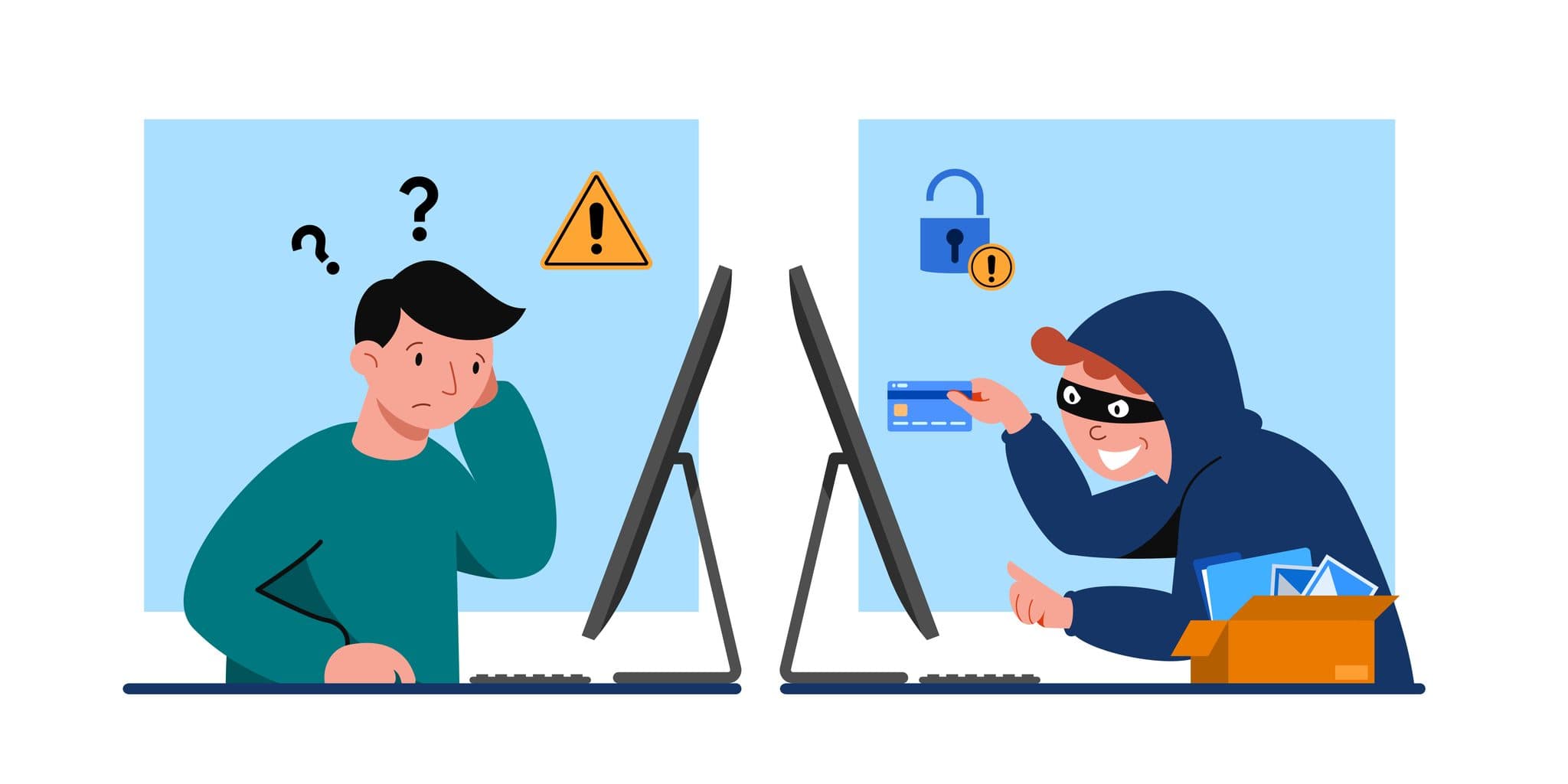
Can law enforcement keep up?
By Megan Jantos
Scammers cross borders. Can law enforcement keep up?
A Weston resident in their 80s recently lost $10,000 to scammers, and Police Chief Kelly Clark fears the money may never be recovered.
The resident withdrew cash from the Bank of Weston before losing it to scammers, Clark said during an Oct. 14 community presentation on elder financial fraud. The investigation subsequently encountered complications involving Kansas, illustrating the challenges local police face when financial crimes cross state lines.
Clark said he was concerned about whether sufficient questions were asked before the withdrawal. The Weston Chronicle contacted the Bank of Weston for comment but had not received a response by publication time.
The case is one example of a growing national problem that increasingly requires cooperation among local police, regional investigators, financial institutions, prosecutors and federal agencies.
Americans aged 60 and older reported nearly $7.75 billion in losses to internet-enabled crime in 2025, according to the FBI’s Internet Crime Complaint Center. The agency received 201,266 complaints from that age group.
Clark was joined at the presentation by Brian Karman, law enforcement coordinator for the Mid-States Organized Crime Information Center, or MOCIC, which provides specialized investigative assistance to law enforcement agencies across nine Midwestern states.
Karman said financial fraud victims frequently hesitate to report their losses because of embarrassment or fear that family members will question their ability to manage their finances.
“Being a victim is being a victim,” Karman said. “We need to really get past that stigma.”
When crime crosses state lines
Weston’s proximity to Kansas creates additional challenges when scammers direct Missouri residents to complete transactions across the state line.
Clark said some victims are instructed to withdraw money and travel to cryptocurrency ATMs in Kansas, including locations in Leavenworth.
Once the money is transferred, determining which agency should investigate and where criminal charges could be filed becomes more complicated.
However, Missouri and Kansas laws both provide potential avenues for prosecuting crimes that cross state boundaries.
Missouri Revised Statutes Section 541.191 allows the state to exercise criminal jurisdiction when an element of an offense or a result of the criminal conduct occurs in Missouri.
Kansas law similarly permits prosecution when a crime occurs wholly or partly within the state. Under Kansas Statutes Section 21-5106, that can include circumstances in which a material element of the offense or a sufficiently connected consequence occurs in Kansas.
Kansas also has special provisions governing where crimes involving electronic devices may be prosecuted.
The laws mean that crossing a state line does not automatically prevent either state from pursuing criminal charges. Whether prosecutors can establish jurisdiction depends on the facts of an individual case.
For investigators, the challenge extends beyond determining where a crime occurred. They must identify suspects, obtain evidence, coordinate with other agencies and locate assets that may have moved through multiple accounts or countries.
Karman said scammers understand these complications and use them to their advantage.
Following the money
Despite those obstacles, specialized investigators have developed methods for tracing certain cryptocurrency transactions.
Karman explained that many cryptocurrency transfers are recorded on publicly accessible blockchains, allowing investigators to follow digital assets between wallets.
If stolen funds reach an exchange that cooperates with U.S. authorities, investigators may be able to seek a freeze or seizure.
The process requires coordination among police departments, prosecutors, courts and financial institutions.
In a follow-up interview, Clark explained what happens when a Weston resident reports a suspected scam.
Officers begin an investigation and direct the victim to submit a report to the FBI’s Internet Crime Complaint Center. The department then contacts MOCIC for assistance tracing the money.
If investigators identify assets that may be recovered, Clark said the department works with prosecutors to seek the necessary judicial authorization.
Although Karman described cases in which investigators recovered portions of victims’ losses, Clark confirmed that the Weston Police Department has not yet recovered money for a local scam victim.
Karman said his organization assists with six to nine financial fraud cases daily. He described losses ranging from relatively small amounts to a $600,000 investment scam in Platte County and a $1.2 million romance scam in western Kansas.
He estimated that investigators working with his organization have sometimes recovered 30% to 40% of stolen funds, although results vary by case.
“The sooner we get that information, the better,” Karman said.
Banks on the front line
Missouri has also expanded the tools available to financial institutions to help prevent fraud before money leaves customers’ accounts.
A state law that took effect Aug. 28, 2025, allows banks to report suspected financial exploitation to law enforcement or appropriate protective agencies.
Under Missouri Revised Statutes Section 362.424, banks may voluntarily establish trusted-contact programs that allow customers to designate individuals who can be contacted when suspicious activity is detected.
The law also permits banks to offer accounts with transaction limits and restricted account-viewing access for designated contacts.
Similar provisions apply to credit unions.
The measures are voluntary, however, and financial institutions are not generally required to establish trusted-contact programs.
The law raises questions about what safeguards are available when an older customer attempts a large withdrawal that employees suspect may be connected to a scam.
It also highlights the balance financial institutions must maintain between protecting customers from exploitation and respecting their right to control their own money.
State and federal agencies respond
Missouri’s Department of Health and Senior Services operates an Office of Special Investigations that assists law enforcement agencies with financial exploitation investigations involving vulnerable adults.
The office provides investigative assistance, specialized training and support to prosecutors.
At the federal level, the FBI’s Internet Crime Complaint Center collects reports of suspected internet-enabled crimes and uses the information to identify patterns and support investigations.
The FBI also operates a Recovery Asset Team that works with financial institutions and field offices to attempt to freeze money associated with qualifying fraudulent transactions.
The Department of Justice’s Elder Justice Initiative coordinates investigations, prosecutions and prevention efforts involving crimes against older Americans.
Its Transnational Elder Fraud Strike Force focuses on criminal organizations operating across international borders.
In June, the Department of Health and Human Services announced a Federal Elder Justice Action Plan through the Elder Justice Coordinating Council, which brings together 17 federal departments and agencies. The announcement also launched a national campaign called “Never EVER” to help Americans recognize government and business impersonation scams.
The coordinated response reflects the increasingly international nature of financial fraud.
Karman described criminal operations in Southeast Asia where people recruited under false pretenses are forced to participate in online scams.
Some are compelled to establish fraudulent relationships or promote nonexistent investments to deceive victims thousands of miles away.
Such operations can make identifying and prosecuting the people responsible particularly difficult for local authorities.
Prevention starts with a conversation
During the Weston presentation, residents shared experiences involving fraudulent prize notifications, romance scams and calls from people pretending to be family members in trouble.
One attendee described a relative who sent three payments of $30,000 after being told he had won a substantial prize.
Another described a family member receiving calls from someone impersonating a grandson who supposedly needed money to get out of jail.
Karman warned that artificial intelligence can make impersonation schemes more convincing by allowing scammers to imitate familiar voices.
He recommended that families establish private verification phrases, consult trusted individuals before making unusual financial transactions and resist pressure to send money immediately.
Clark urged residents to contact the Weston Police Department when they suspect a scam, even if they are uncertain whether a crime has occurred.
“I would rather you call me and I prevent you from doling out $10,000, $20,000 of your hard-earned, saved money,” Clark said.
For law enforcement, recovering stolen assets can require cooperation across jurisdictions and international borders. For residents, preventing a loss may begin with a phone call to someone they trust before money changes hands.
Victims can report internet-enabled fraud to the FBI at ic3.gov and suspected financial exploitation to local law enforcement.